Social Relationships for Better Mental Health
Introduction
Human beings are naturally social. Our relationships with friends, family, and loved ones play a powerful role in shaping not only our emotional well-being but also our physical health.
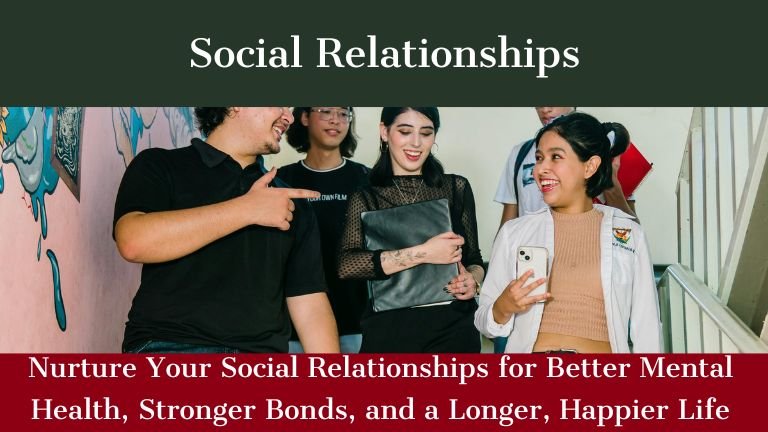
Strong social connections provide comfort, support, and a sense of belonging that improves overall quality of life.
How Social Relationships Improve Mental Health
Healthy social relationships help protect your mental well-beingin many ways:
- Reduce feelings of loneliness and isolation
- Lower stress and anxiety levels
- Improve mood and emotional resilience
- Provide emotional support during difficult times
When you have people to share experiences with, life feels more manageable and meaningful.
Physical Health Benefits of Strong Relationships
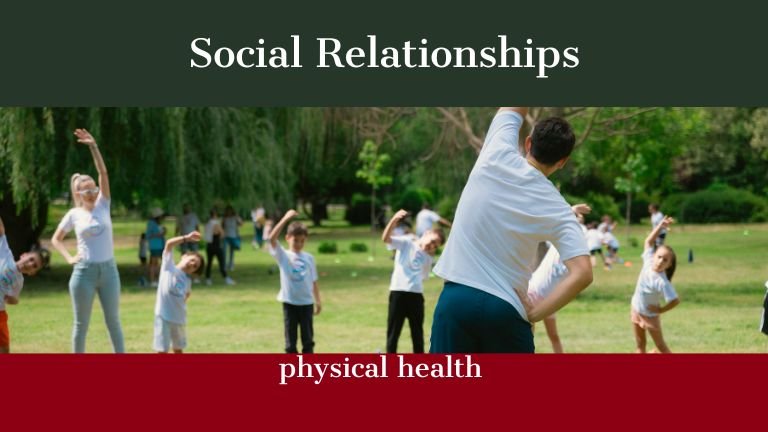
Research shows that people who maintain close relationships tend to be healthier and live longer. Positive social connections can:
- Lower blood pressure
- Strengthen the immune system
- Reduce the risk of depression and chronic diseases
- Improve recovery from illness
Emotional support has a direct link with better physical health outcomes.
Simple Ways to Nurture Your Relationships
Building stronger connections doesn’t have to be complicated:
- Spend quality time with loved ones
- Call or message friends regularly
- Show appreciation and gratitude
- Be present and listen actively
Small efforts can make a big difference over time.
Final Thoughts
Nurturing your social relationships is one of the most powerful yet simple ways to improve your health and happiness. Meaningful connections give life purpose, reduce stress, and help you live a longer, healthier life.
Frequently Asked Questions (FAQs)
Q1. Why are social relationships important for health?
Social relationships reduce stress, improve mood, strengthen immunity, and support both mental and physical well-being.
Q2. Can strong friendships help you live longer?
Yes, studies show that people with close friends and family often live longer and healthier lives.
Q3. How do social connections improve mental health?
They reduce loneliness, provide emotional support, and help manage anxiety and depression.
Q4. What are simple ways to strengthen relationships?
Spend quality time together, communicate openly, listen actively, and show appreciation regularly.
Q5. Can social isolation affect physical health?
Yes, loneliness is linked to higher risks of heart disease, weak immunity, depression, and early mortality.
Disclaimer
This website’s content is meant simply for educational purposes and should not be used in place of medical care from a qualified healthcare provider. Because of the reader’s individual needs, they should speak with their doctor to determine whether the information is appropriate for their situation.